AThetaLife Observatory

Conditions Shaping
the Lifetime Ahead

Follow evidence-based conditions across the decades ahead— locally, regionally, nationally and globally. See where conditions stand today, what is being done, what could improve them, and whether current responses appear sufficient to move toward a more sustainable, stable or resilient future.

Observatory Viewing Horizon: 80 Years

The Lifetime Horizon

Eighty years can encompass much of a person's remaining lifetime while reaching well into the lives of children and grandchildren.

2026 2046 2066 2086 2106 Your lifetime horizon Children's generations Grandchildren's generations
Local Regional National Global

Conditions to Watch

Each Observatory topic follows the condition, the response, and the pathway toward an evidence-supported target rather than assuming that today's direction must become tomorrow's outcome.

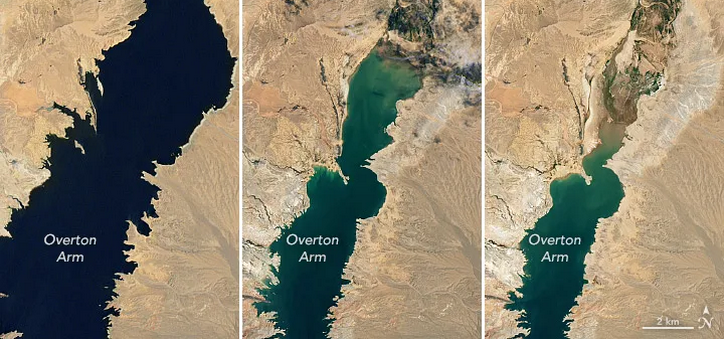
Satellite comparison showing changing Lake Mead water levels

Image: USGS / NASA Landsat • Public Domain

Regional • U.S. Southwest

Colorado River Water

Condition: Serious Pressure Direction: Worsening

The Colorado River supports cities, agriculture, ecosystems and power generation across the Southwest. Long-term drought, warming, variable runoff and competing demands have placed increasing pressure on the system. Conservation, operating changes, efficiency and new water-management strategies can alter its future course.

80-Year Viewing Horizon

2026 2046 2066 2086 2106
Today — Serious Pressure
Possible Condition Pathway - The stages below are not assigned to specific years unless evidence supports a dated transition.
Serious
Pressure
Stabilizing
Approaching
Target
Sustainable
Range
Corrective Response Major work underway
Is It Enough? Not yet demonstrated
Target Sustainable water balance
Direction Needed Stabilization → recovery
Estimated Target Window Not yet established

Target dates are shown only when supported by sufficient evidence. Until then, the pathway describes direction rather than timing.

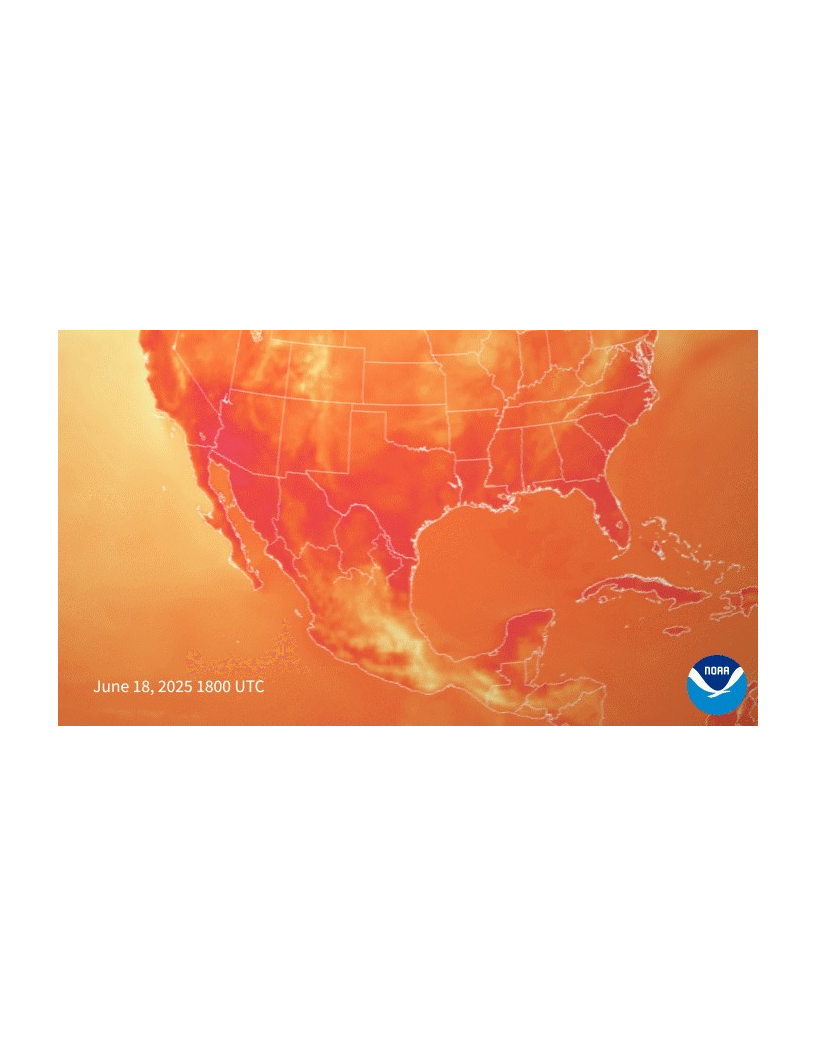
Extreme climatic heat conditions

Image: NOAA / NESDIS

National • Global

Extreme Climatic Heat

Condition: Increasing Pressure Direction: Worsening

Rising temperatures are changing the frequency, duration and intensity of extreme-heat exposure in many regions. Outcomes depend upon geography, infrastructure, adaptation, energy systems, public-health measures and population vulnerability.

80-Year Viewing Horizon

2026 2046 2066 2086 2106
Today — Increasing Pressure
Possible Condition Pathway - The stages below are not assigned to specific years unless evidence supports a dated transition.
Increasing
Pressure
Stabilizing
Risk
Reduced
Resilient
Range
Corrective Response Adaptation and mitigation underway
Is It Enough? Varies by region
Target Reduced heat vulnerability
Direction Needed Risk reduction → resilience
Estimated Target Window Location-dependent

The target represents reduced exposure and improved resilience rather than elimination of extreme heat.

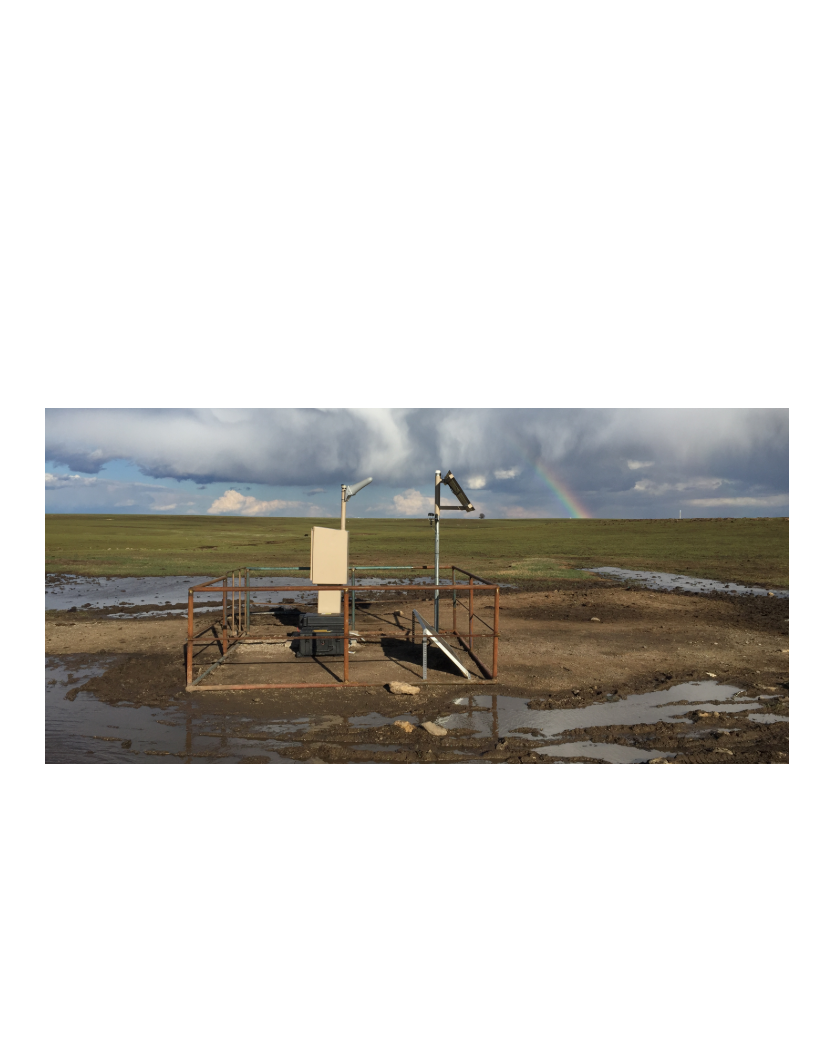
Groundwater resources and aquifer conditions in the United States

National • United States

Groundwater Resources

Condition: Pressure in Key Regions Direction: Mixed

Groundwater supplies homes, farms and communities across the United States. Some major aquifers are experiencing long-term declines where withdrawals exceed replenishment, while conditions and management vary substantially from one region to another.

80-Year Viewing Horizon

2026 2046 2066 2086 2106
Today — Regional Pressure
Possible Condition Pathway - The stages below are not assigned to specific years unless evidence supports a dated transition.
Regional
Pressure
Decline
Slowing
Approaching
Balance
Sustainable
Use
Corrective Response Management varies widely
Is It Enough? Region-dependent
Target Withdrawals aligned with replenishment
Direction Needed Slower depletion → balance
Estimated Target Window Varies by aquifer and region

Groundwater cannot be assigned one national target date. Each aquifer requires its own evidence-based assessment.

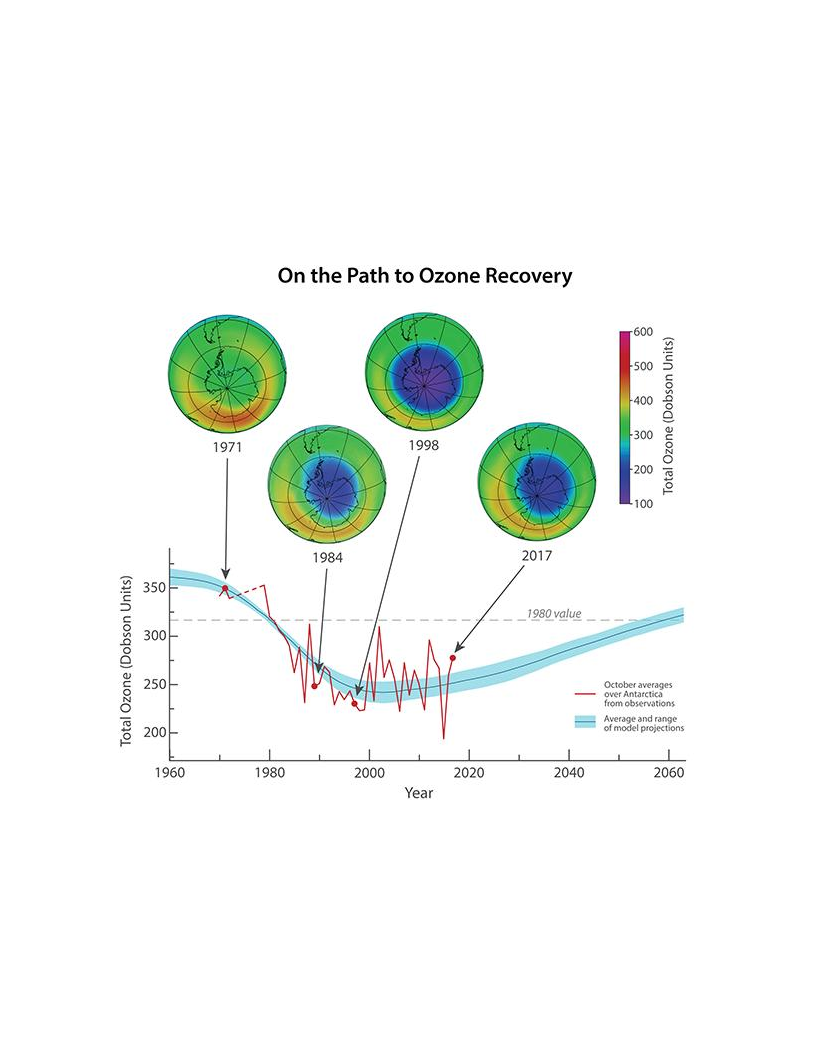
Visualization of Antarctic ozone layer recovery

Image: NASA

Global • Stratospheric Atmosphere

Ozone Layer Recovery

Condition: Improving Direction: Improving

International controls on ozone-depleting substances have reversed much of the earlier damage to Earth's protective ozone layer. Recovery is underway, although continued monitoring and compliance remain necessary.

80-Year Viewing Horizon

2026 2046 2066 2086 2106
Today — Improving
Possible Condition Pathway - The stages below are not assigned to specific years unless evidence supports a dated transition.
Earlier
Pressure
Response
Working
Improving
Target
Maintained
Corrective Response Montreal Protocol controls
Is It Enough? Yes — recovery is on track
Target Return toward 1980 ozone levels
Direction Needed Maintain controls and monitoring
Estimated Target Window ~2040–2066, depending on region

Ozone recovery demonstrates that coordinated international action can change a long-term environmental trajectory. Continued compliance and atmospheric monitoring are required to keep recovery on track.

How to Read an Observatory Pathway

Each pathway begins with the condition as it exists today. Colored stages describe meaningful condition states—not predetermined dates.

Red identifies serious pressure. Orange represents stabilization while meaningful pressure remains. Yellow represents movement toward a defined target or watch range. Green represents the target, sustainable, stable or resilient condition appropriate to that subject.

A target year or target window is displayed only when the underlying evidence supports one. Otherwise Observatory will indicate that the target date is not yet established.

Evidence • Not Prediction

Observatory distinguishes measured history, current conditions, scientific projections, corrective responses and increasing uncertainty. A pathway is not a declaration that a particular future must occur.

Conditions can improve, worsen, stabilize or change direction. Reports and pathways will be revised as measurements, research, policies, technologies and circumstances change.

Looking Across Generations

A condition that appears distant on a news timeline may fall comfortably within the lifetime of someone already living. An 80-year view makes it possible to consider not only the years ahead for ourselves, but the conditions our children and grandchildren may experience.

Your Time Within This World

The conditions around us form part of the environment for our own lives. AThetaLife places our personal time-horizons within that larger area of critical influences and challenging conditions, helping further with how we make tomorrows decisions.